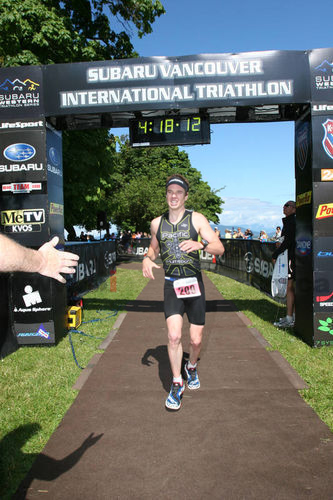
Pain is something that too many of us live with on a daily basis. We often don't understand it, it's simply "there". We get frustrated when we injure ourselves and when we recover all too often something else goes wrong and we ask ourselves "why?". Most of us have all had our fair share of injuries throughout our lives
and I think it's probably a rare occurrence for any athletic person to
not have any lingering effects from at least one injury that they have
sustained. Point being... you can probably relate to this.
Personal History with Pain
Ok... some of the pain is self inflicted. ;)
I've been living with chronic lower back and hip pain for over 15 years. It got so bad at one point in my mid twenties that I could hardly stay on my feet some days. I actually had to go on disability leave from work for a few months. In particular, I have lots of pain down my right side including my hip, glutes, knee, calf, achilles and foot. That's where most of it comes from although I have imbalances on both sides of my body. I've also got an issue in the mid/left side of my back that I'm working on as well as some shoulder issues. I've had X-Rays, CT Scans, MRI and visited numerous doctors in an attempt to understand what my problem was. It stretched out over a couple of years with no real answers and eventually I became fed up with the medical system and decided that I would have to find another way.
I decided that the only way that I could fix my body was to make it stronger and improve my fitness. It was a slow process at first since I hardly ever did any exercise at all until I moved to Vancouver. If you're interested in knowing more about how I initially got into triathlon and what my lifestyle was before moving here then you should read my first blog post entitled "In the Beginning".
painPRO Therapeutics
One of the major reasons why I started leading an active lifestyle and ultimately got into triathlon was to make my body stronger and reduce the amount of pain I live with every day. Although it definitely helped, I was never able to get rid of it. As I mentioned in my previous blob post "Back on Track" I have some imbalances in my body. When I've been injured in the past my body has compensated in order to continue functioning by utilizing other muscles to do the work of the injured muscles, ligaments or tendons. The problem with that, as I've learned first hand, is that once your injury has healed your body continues to compensate because the injured muscles are now weak due to the lack of use. That's why it's important to see a physio therapist ASAP during your recovery, to make sure that you rehabilitate your muscles properly. When I was younger, visiting a physio therapist was something that I never used to do after being injured (I had my fair share of injuries as a teenager ripping around on my skateboard and snowboard). I figured that my body would just heal and get back to normal. It was never properly explained to me and I never put too much thought into it.
Invest in your Body
Over the last few months I've experienced great relief from regular massage therapy sessions. My muscles are very stiff and it helps me to stay relaxed and loose. In order for your muscles to function properly it's important to take care of them. I've been going to painPRO Therapeutics in Vancouver on a regular basis.
One of the really great things about painPRO is the ease of making appointments. If something happens mid week, I can schedule an appointment right away (up to 15 minutes before the actual appointment time!). Talk about great service. All of the therapists there are amazing and highly skilled so it doesn't matter who I go see, the result is always great. With a name like painPRO you can't go wrong! :)
My favorite! Renegade Rows with Sean Del Ben.
Since November 2012, I've also been working with Strength and Conditioning Specialist Sean Del Ben on a weekly basis to fix the imbalances in my body. The first thing that Sean did was put me through a functional movement screening test to determine where my weaknesses were. By pin pointing my individual weaknesses Sean was able to give me specific exercise to isolate the appropriate muscles. The exercises that we do are specifically focused on improving stability, functional movement and range of motion.
One of the most important things to remember when doing strength work is form. It's crucial to make sure that you are executing the exercise properly otherwise you could be doing more damage instead of fixing your issues. That's why it's so great to work with a personal trainer. Sean always makes sure that I'm doing everything properly each week. When I do the exercises at home I concentrate on everything that he has taught me and try to imagine him there making sure that I keep my form together.
He's also incorporated specific stretches to help with my flexibility which has been a tremendous help. When I'm out on the TT bike I need to be flexible to get into the ideal aero position. My hamstrings, glutes, hip flexors and quads are more flexible than ever lately. For the last three years I was unable to straighten my right leg and flex my muscles at the same time. I did it a couple of times while stretching in bed as I woke up half asleep and it took a few weeks each time to fully recover from the subsequent injury. This also has a lot to do with the regular massage therapy. With each visit to painPRO over the last few months my quads have become less tense and easier to manipulate. They are looser than they've been since I started all the training a few years ago. This week I was actually able to straighten my leg completely and flex as hard as I could without any issue at all! For the last couple of years I'd been thinking that I would never be able to do that again. I honestly had doubts when Sean told me that he was going to help me get rid of these issues when he first started working with me.
Kettlebell Swings.
Although I'm still not 100%... I've been feeling less pain now than I've felt for over 12 years which is incredible! After years of suffering, only a few months of regular massage therapy at painPRO and regular sessions with Sean Del Ben has given me better results than years of visiting doctors and looking for a diagnosis and proper treatment. Investing in my body has been worth it beyond any doubt. If you're having similar problems I strongly recommend giving these two methods a try. Living with pain and constant injuries is no way to live. Break free from pain, feel good and get the most out of your body.
I hope that through sharing my personal experience I can help others resolve their issues faster than I resolved mine. It's kinda crazy that it took me so long to finally get some results. If you have any questions about any of this or if you'd like to share your own experience please leave your comments below and I'll make sure to get back to you ASAP. If you're interested in following my progress you can also follow me on Facebook by clicking HERE and on Twitter by clicking HERE. Thanks for taking the time to read my blog. :)
I'm back! I had a tough season in 2012 and it was difficult for me both mentally and physically. I've been meaning to start blogging again for quite some time. Thank you to everyone who has visited my blog in the last few months, I really appreciate your interest in my development. Inevitably this blog post is a little lengthy but it shouldn't take too long to read. I'll post regularly from now on and keep it shorter in the future. :)
Health Issues
Many
people may think that not being able to start four separate Ironman
70.3 races and two DNF's (including one at Ironman Canada) would be a
season completely wasted away. In truth, no experience is wasted.
Sometimes you have to take what life throws your way, break it down,
take what information you can from it and move on.
To say that 2012 was a tough race season for me would be an understatement. As I mentioned in my last blog post after Shawnigan Lake, I've been suffering from gastrointestinal problems for some time now. I've been trying to find out what the cause of the problem is and have been getting some tests done.
In June I had a colonoscopy to see see if there is any physical problem with my gut. My doctor took a couple of biopsy samples and had a look around to see if he could find anything wrong. Unexpectedly he found a medium sized polyp in my lower intestine which he proceeded to remove but apart from that everything looked fine. Polyps are fairly common (although not so common in people my age) and rarely malignant. I actually watched the procedure and it looked like it went really well (I'll spare you all the photos...).
On was on a pretty heavy dose for this one..
Unfortunately, I suffered a very rare side effect from the procedure. Somehow I got a small perforation in my gut which started a septic infection. I've never before been in so much pain... It was pretty crazy. I ended up spending five days in the hospital recovering which consisted of constant monitoring, morphine, dilaudid, IV drip with heavy antibiotics, regular blood tests and really bad hospital food. The only fun part was that I kept setting off the alarm with my mid 30's resting heart rate. I had to explain to each new nurse that I was an elite endurance athlete. Although it wasn't the greatest experience, the staff at VGH hospital were really nice and I was well treated.
Having said all of this, I feel a responsibility to mention that you should never hesitate to get a colonoscopy if you think you need one. Perforations are extremely rare and not getting one when it's needed could lead to much worse things like undiagnosed colon cancer or other intestinal diseases. The actual procedure was not painful at all (and watching the live video as they did it was actually quite interesting).
Okanagan Lake - Near Kelowna in August
After my stay in the hospital I was on two separate antibiotics for a week and then needed even more time to make sure that my gut was fully recovered before getting back into training. I went to Montreal for twelve days at the end of June and gradually started to bike again and actually managed to get a good long ride in. I biked from Laval through Oka all the way to Ontario and then back through Montreal covering over 170km. Fortunately I still managed to maintain some endurance and I felt great during this ride. I also fit in a few other rides and a couple of short runs as well. Swimming took a big hit though and I didn't swim at all for a full month in June.
Training for Ironman
When I got back from Montreal on July 1st I started to slowly get back into my training routine but I had not done enough leading up to the Vancouver Half Iron so I decided to drop out on the bike course and cheer my friends on instead. I wasn't too dissapointed since I was never really expecting to finish the race anyway. Instead of racing at Lake Stevens the following week I opted instead to go to Penticton and do a weekend training camp to prepare for Ironman Canada. Since any races I would have done that month would have been sub par Coach Bjoern and I decided to switch my focus directly to Ironman Canada.
I trained well during the month of July and early August and was really feeling good leading up to IMC. Since I only had around 5 weeks to get ready for the big race before the taper would have to start it was really important to make sure I was ready to keep up the pace on the bike and the run. I focused on those two disciplines. I still got in the pool and swam in the open water but I couldn't devote as much time to it. I kept a positive mind set and focused on the task at hand. The week leading up to the race was really fun. It was my first time racing at Ironman Canada in the pro field. It was an exciting experience.
Race Day
I knew that I would struggle a little bit during the swim with my lack of swim fitness over the summer but I wasn't too worried about losing a lot of time. I did well during the first half of the swim. I stayed with the main pack until around the 1900m point (1.2 miles) but after that I started to fade and ended up finishing around two and a half minutes back from the pack. One thing that I didn't envision was that my lack of swim fitness could cause problems later in the race. Because I got tired halfway through the swim my form deteriorated which not only led to a decreased speed, it also caused my lower back to become sore since I wasn't engaging my core properly. All in all though, the swim went well considering the minimal training and I was out of the water in less than 1 hour.
Video from the Ironman Canada bike course (after Richter Pass):
When I started on the bike I felt pretty good at first. I knew I wasn't far back and I had been getting good results during training. Not far into the ride though I started to have some severe pain in my glutes, in particular in the glute medius area. The fit on my bike was really well dialed in so it was not an issue with the bike. I had neglected to incorporate stretching and flexibility into my daily routine and I paid the price for it. The pain in my glutes lasted around 80+ kms (around 50 miles). Once I got over Richter Pass the glute pain started to subside as the muscles went numb but it was replaced with excruciating pain in my lower back. I figure that since my glutes finally gave up I was not able to keep good form on the bike anymore. I rolled my hips forward and this caused me to put a lot of pressure on my lower back. The pain became so intense that I considered dropping out a few times. I kept telling myself to just keep going and make it to the run. I knew that when I got to the run this pain would go away since I would not be using my body the same way anymore. The bike portion of the race ended up being much slower than anticipated with a total time of 5 hours and 9 minutes. The good thing about not being able to ride as fast as I could was that I felt great when I started the run. The absolute bliss of being off the bike made me feel like I was running on fresh legs. I might have felt a little too good...
Video from the Ironman Canada run course:
As soon as I got onto the run I was running at a decent pace and was on target to do the run in under 3 hours and 10 minutes which was what I had trained for. The first 15km's I felt really good and comfortable and was still on pace but soon after that I started to fade really fast. Ironman is a tough distance so it's normal to feel sore but this wasn't a soreness. I soon realized that I had not been properly absorbing my nutrition on the run. I was taking liquid calories and was careful to make sure that I was taking the proper amount of fluids, calories and sodium but it was just sitting in my stomach and not going anywhere. No wonder I was fading, I had been running for over an hour without taking in any calories or fluids! I knew this because I started to throw up since there was no room left in my stomach. It didn't hurt, it just wasn't going anywhere. My stomach wasn't used to absorbing calories under such a high effort. Although I felt pretty good during the initial part of the run, my HR was probably too high to allow my body to ingest anything. I had no issues at all with nutrition on the bike, only on the run which is pretty typical.
Excluding the Vancouver Half Iron (which I never planned to finish) this was the first race that I ever had to drop out of. I don't like to quit but after the rough season that I'd had I was not up to pushing myself through the discomfort just to "finish " a race. I'd already done this distance before so it was not all that important to simply finish.
Run Focus
Surrey International Half Marathon
The good part about not finishing an Ironman race is that you recover really quickly and you can start training again almost immediately. I decided to refocus on my running speed after this and race in the Surrey International Half Marathon at the end of September. My training leading up to this race went really well and I ended up finishing second overall on a really hilly course with a time of 1 hour 18 minutes and change.
After that race I kept focusing on running for the rest of October. Although I was running faster than ever before I decided that I needed to take a break from training after a sub par result at the James Cunningham Seawall race and get my body sorted out if I was going to have a good season in 2013.
Video from the James Cunningham Seawall Race:
Getting to the Root of the Problem
In November I started working with strength and conditioning expert Sean Del Ben to correct my muscular imbalances, strengthen my body and improve my flexibility. I also started doing bi-weekly and eventually weekly massage therapy sessions at painPRO therapeutics. Those two things combined have made a world of difference and have set me back on the right track. I will go into that in more detail further down.
As for now, it's late February and training is back up to normal volume. I'm feeling much better than last year and have already set new PR's in the pool and at the track after only being back to regular training for one month. Biking has been going great with four spin sessions a week that I coach at West Point Multisport plus the outdoor rides that coach Bjoern gives me. I've also narrowed down the GI problems that I'm having to food sensitivities and have been much more careful with my diet which seems to have really helped with my issues.
Thank you! Thanks for taking the time to read my blog. I really appreciate the support. In fact, I could not do any of this without you. The positive support that I get from everyone around me gives me strength and helps me to be even more dedicated to achieving my goals. I meet amazing people that inspire me everyday when I'm training or working at West Point Multisport. I love triathlon and I am so passionate about it, it's great to see so many other people out there who share my passion. :)
Björn and Stephanie Ossenbrink
Björn Ossenbrink has been my coach since 2010 and he has been an integral part of my development as an athlete and a coach. Without him I wouldn't have made it this far and I really appreciate all the work and time he has put in for me. A special thanks to you Björn! Team Ossenbrink also includes some amazing elite athletes like Rachel McBride, Stephanie Ossenbrink, Elliot Holtham and Nathan Killam. They have pushed me to become a better athlete and I've been lucky to train with them. There's also a full team of elite amateur athletes like Richele Frank, Geneviève Cauffopé, Geoff Watts, Kimberly Appleton and Craig Dale to name a few (sorry if I left you out, there are simply too many to name here!). Click on their names to check out their website/blogs. They are all tremendous athletes.
Sponsors
Thanks to all of you I've also been able to partner up with some amazing
sponsors that help to make this possible. They have
been phenomenal for me. I'm really lucky to have such great sponsors and
partners that believe in me and support me in achieving my goals. I
personally selected each and every one of my sponsors based on the
quality of their products and services so if you need gear or help with
injuries then check them out, they will not disappoint.
A shoe for every type of workout or race!
Zoot Sports is a triathlon specific company so you can always be sure that you're getting the most relevant products from them. Unlike many other companies that focus on multiple different markets Zoot Sports focuses specifically on triathlon and does it right. With leading edge technological innovations you can be sure that you're getting the best gear available. They supply me with all of my apparel for training and racing (including all my winter training gear) as well as wetsuits and shoes. I've been training and racing with their shoes for the last three years and couldn't be more happy with the quality and comfort that I get from them. Zoot has a whole line of training shoes as well as racing shoes to suit all of your needs. One of the things that I like the most with Zoot shoes is the level of comfort. They are made to be worn without socks and don't have an annoying tongue that moves around while you run and gets in the way when putting them on. This year I'll be racing with the new Ultra Kiawe shoe. Their wetsuits are also amazing. I've been racing with the Zoot Prophet for the last year. The first time I wore it I set a new PR! :)
Custom built 2013 Trek Speed Concept 9 series.
West Point Multisport is the "go to" triathlon store and premier Fit Lab in Vancouver. The service that they offer is second to none. With plenty of brands to chose from you can almost always be sure to find what you're looking for. Whether you're looking for swimsuits, swim equipment, tri clothes, bikes, compression, wetsuits, triathlon race shoes, aero helmets, nutrition or any other accessories they can help you.
The fit specialists at West Point
Multisport are highly trained and experience and will ensure that you are most
comfortable and efficient on your bike. If you've never been fit on your bike
then don't wait any longer! The benefits of a properly fit bike are substantial and
immediately noticeable (not to mention safer!). They've recently upgraded
to the newRetül fit
system with 3D motion capture technology.
They also have a free monthly triathlon lecture series from April to August with guest speakers and great training and racing tips as well as multiple weekly spin sessions from October to March every year. Starting in April there are also free group rides three times per week. I will also be coaching a run clinic with video technical analysis this coming spring to help people improve their run form and prevent injuries as well as gain some extra speed. They even offer regular free flat fix clinics during the spring/summer. You can follow them on their Facebook Page to keep track of all the great special events or sign up for the occasional news letter on their website.
For all your other biking needs
that don't include triathlon you can visit West Point Cycles with two
convenient locations (W. 10th, near Alma & W. Boulevard, near 45th Ave in
Kerrisdale). They carry some amazing gear and bikes for mountain biking,
commuting, cyclocross, road, kids, dog trailers etc. - the list goes on!). They
have a friendly and knowledgeable staff including a team of highly skilled
mechanics to get your bike running in tip top shape. You can also follow them
on theirFacebook Pageand sign up for the occasional news
letter on theirWebsite for
informational on special events.
Wow! Those quads are tight!
painPRO Therapeutics has been instrumental for me in regard to loosening up my body after all of the hard workouts and years of neglect on my behalf. Apart from the highly skilled therapists that work there they set themselves apart from other companies with their amazing live online booking system that allows you to book appointments up to 15 minutes before hand. Hard swim set has you feeling a little sore? No problem, you can book a lunch time appointment at one of their convenient downtown locations for a quick session. They even offer ultra efficient and intensive 15 minute sessions for those with a busy schedule and specific issues. With a name like painPRO you can't go wrong! :)
Since I started regular visits at painPRO last June I've noticed some huge improvements in regard to muscles stiffness and mobility. Each time I go there my muscles are getting looser and making my recovery times shorter and helping prevent injuries.
Compressport Triathlon Kit
Compressport has been there with me since the beginning. If you want to recover faster then you should definitely consider using some quality compression products from Compressport. They are a compression specific company from Switzerland. They don't make any other products. All of their research and development is 100% focused on compression ensuring that you get the best quality and technology. Compression wear has two purposes. It helps you to recover faster by stimulating blood flow and redistributing blood that pools in your capillaries during training. By recirculating blood back into your heart it can get redistributed to the your hard working muscles making you more efficient. It also helps by stabilizing the muscles which reduces fatigue over time.
Focused strength training with Sean Del Ben
Sean Del Ben is my latest partner and boy is he helping me become a better athlete! He's a strength and conditioning expert and has been helping to create balance in my body by focusing on the muscles that are causing imbalances. I've had many injuries throughout my life and whenever this has happened my body has compensated and started to use other muscles to do the work that the injured muscle would normally do. The problem with that is that when you recover from the injury your muscles are weakened and if you don't do proper rehabilitation those muscles may never get back to their original strength. Your body keeps compensating and this eventually leads to other injuries and tight muscles from unnatural strain. This was a major problem for me last year. My muscles were so tight that I was struggling during races when the higher efforts were sustained longer than usual. Sean also does group training for endurance athletes so you can recruit some friends to train with you and get a group rate. I have NO DOUBT that every athlete out there would benefit from working with Sean Del Ben.
K.31 CRONO from Kask Helmets
Kask Helmets supplies me with the most amazing helmets on the market. You may remember them from watching team Great Britain during the Olympics or team Sky during the Tour de France. I'll be racing with the highly acclaimed K.31 CRONO and training with the incredibly comfortable and lightweight Vertigo. The Vertigo is by far the most comfortable helmet I have ever worn. It has more adjustability than any other helmet I've seen (and I work part time in a bike store!). The K.31 CRONO has a special shape which keeps the helmet right up against your body when you have your head down in the aero position ensuring the best aerodynamics. It also has a built in visor which you can easily push up out the way with the hinged design.
More blog posts to come!
Thanks again for reading my blog and following my progress and development. You can also follow me on Facebook and on Twitter (click on the words to activate the link). If you have any questions or comments about any of this please write them at the bottom of this post, I would love to hear from you and will get back to you ASAP. I plan on updating my blog regularly from now on so check back soon. I'll try to keep it shorter from now on! I've purchased a GoPro video camera and I will be creating a YouTube or Vimeo channel with lots of great training videos and coaching tips. :)
Before I get into my race report, here's a bit of background information as to what I've been going through over the last few months leading up to the race season. I meant to get a blog post out earlier but I've been so busy these days that it's sometimes hard to find the time.
As most of you out there know, there are often setbacks involved with training and preparing for the race season. I made some pretty good progress between January and March, especially on the bike and in the pool but running has been a bit of a struggle again this year. Running puts a lot of stress on your body and is usually where most people will have problems. In 2011 I had to deal with planter fasciitis, in 2010 I had to have knee surgery and in 2009 I struggled with ITB Syndrome all of which I have overcome.
This year I'm having some GI (gastrointestinal) problems which is limiting the amount of intensity that I can handle during periods of high exertion, in particular during track workouts and fast interval sessions. It got so bad in March & April that I had to stop running almost completely. I even had to stop swimming and cut back on biking for almost a full month. I've been trying to figure out what the issue is and have had lots of tests taken and I've still got a couple of tests coming up over the next couple of months.
Delta Triathlon on my Trek Speed Concept
I've had some GI sensitivities for many years now but it never really bothered me enough to do anything about it. Well, actually, it did bother me a lot in the past but my ability to tough out pain meant that I would ignore it (this comes in handy as a triathlete but does not do me any favors in these types of situations). Since I wasn't doing any endurance training until four years ago it was never a severe hindrance to my everyday life. After leaving it unchecked for so many years though, it's started to become a major problem and the symptoms I'm having lately left me no choice but to take it seriously.
Basically, my gut is extra sensitive right now because my intestinal lining is not very strong. Anything that I'm sensitive too is creating more problems these days than usual. My body isn't absorbing a lot of the food that I'm eating which is affecting my energy levels. Fortunately, one of the tests that I did has really helped me to narrow down the problem. I did a lactose intolerance test and found out the hard way that I'm definitely lactose intolerant. I knew that I had issues with dairy products but hadn't realized that they were this bad until now. It took almost two weeks to fully recover from it. It took five days for me to get the full impact of the lactose. It actually made my gut bleed (that's the major symptom that I've been getting occasionally over the last few months).
Delta Triathlon
Fortunately, I visited a gastroenterologist recently and he told me that it looks like my problem is 100% reversible. I'll hopefully find out exactly the extent of the damage that has been made once I get the next couple of tests done.
During the spring months I still did some small races to get myself ready for the official race season. I did a couple of 5k running races which I was able to finish in around 17:20 which was pretty good considering I'd hardly been running at all. It was a good way to maintain a little bit of speed. I also raced at the Delta Sprint Triathlon in April and managed to pull off the overall win taking 1st place. Leading up to that race I had only done around one or two easy runs per week for the previous four weeks and had only gotten into the pool around four or five times so I was really pleased that I still had some speed. It was good for my confidence to know that I hadn't lost too much.
After the Delta race I started to build up my volume again and tried to work on my endurance. I had a bit of a setback with the lactose test during that period but I managed to get in some pretty good training. I was starting to feel confident again leading up to Shawnigan Lake and tried to stay focused and remain positive. I felt pretty good but I wasn't sure what to expect.
Due to my dietary issues, I haven't been eating particularly well over the last couple of months and have struggled at times to get in enough calories. Sometimes when I'm feeling a little sick I neglect to feed myself because I don't want to feel worse and my training suffers because of it. I've lost around 10 lbs in the last three months without consistent training... Not a good way to lose weight. I recently (around three or four weeks before the race) switched to a completely dairy free and gluten free diet in an attempt to be healthier. I've been feeling much better with more energy and no fatigue during the middle of the day which has been great but I've struggled a little bit making the transition. I have to be really well organized and have everything planned out. This ended up being a problem before the Shawnigan Lake race and I didn't eat enough in the couple of days leading up. I also struggled to get enough sleep for each of the three nights leading up to it which I think played a big factor as well.
Kinsol Trestle
Considering all of this, I'm actually pretty happy with how my race at the Shawnigan Lake Half Iron went this last weekend. I had a good swim and still felt fresh when I got out of the water. I was able to swim with a good pack of swimmers who are usually faster than me in the pool (I'm terrible at turns in the pool so when I get into the open water I don't lose time to them anymore). I was able to stay at the front of the group and avoid all of the bumping and jarring that goes on in there. The new Zoot Prophet wetsuit I'm wearing is awesome. It's got some great technology that helps with body position and has ultra flexible Yamato 40 neoprene to keep the stroke feeling natural. I actually felt really comfortable at the pace we were swimming at so I'm pretty sure I could maintain the pace for Ironman without too much trouble. The final swim time said 26:06 but I'm pretty sure the swim course was a little short so it would probably have been around 27 minutes (that would give me 54min IM swim which would be awesome).
I didn't have as quick of a T1 transition as usual but it wasn't too bad and I was able to get on my bike in fairly short order (someone knocked my helmet and glasses onto the ground and I had to fumble around searching for them). Once I got started on the bike I quickly got into a good rhythm and found my pace. The new tri suit I'm wearing, the Zoot Ultra Tri Suit, has amazing compression around the core and really helped me to keep my core engaged on the bike. It made a big difference in terms of staying in a good strong position. Not too long into the first of four laps my friend Brendan Naef passed me (we were in the same swim group) and we ended up riding over two laps together. It was great to have someone there to help keep the pace up. At some point on the third lap I dropped Brendan but it was mostly due to some cars that were in the way on the road that I was lucky to be able to get around fairly easily (he ended up keeping me in sight and finishing only 25 seconds behind me). When I looked at the data after the race I was pleased to see that my first three laps were all within one second of each other which is pretty amazing. I kept the pace really consistant. The new Trek Speed Concept bike that I'm riding from West Point Multisport is amazing. It's the most comfortable bike and fastest bike I've ever been on and it really makes a difference at these races. The Shimano Di2 electronic shifting makes it so much easier on these hilly courses since you don't have to reach over to the aero extensions to shift when you're climbing or accelerating out of corners (with extra shifters on the sides). The last lap was a few seconds slower than the three previous laps but at that point I was starting to think about the run and I wanted to make sure that I had enough energy.
Trans Canada Trail
I got through T2 pretty quickly not wasting any time slipping on my Compressport socks and Zoot shoes but I almost immediately realized that I was in trouble when I started to run. Breathing wasn't too difficult but I just couldn't get my legs moving at my usual pace. I didn't have the energy to get into a good rhythm. I tried to speed up a little to see what would happen but it made me feel sick so I just settled into the best pace I could handle and hoped that I would start to feel better. Around the 6.5km mark Brendan passed me with some words of encouragement (thanks Brendan) but I just didn't have it in me to hold on so I sent him some positive vibes and told him to run the other guys down. Next to pass me was my friend Nathan Killam at the 7.5km mark and he was running really smooth and looking fast. I passed on some words of encouragement to him also and watched him disappear ahead of me (Nathan ended up finishing 3rd which was awesome). I managed to hold on for 8th place and finish with a time of 4h 22m.
Several of my training partners had some great races. Stephanie Ossenbrink finished 2nd overall female in the Half. As I mentioned, Nathan had a great run to finish in 3rd. Brendan finished in 5th and Lawrence Grigg finished in 7th. Donovan Watts finished in 4h 32m and Geoff Watts finished in 4h 33m with a huge PB. Another friend, Cendrix Bouchard, had an amazing race and finished with a time of 4h 51m cutting off a lot of time since last year which was awesome (great swim Cendrix!). Richele Frank won her age group (5th overall female) as did Geneviève Cauffopé. Al Russell had an awesome race finishing with a time of 5h 5min in his first attempt at the Half Iron distance (well done Al!). Anita Holtham had a stellar race and won the women's Olympic distance. There were more but it's hard to name everyone. Congratulations to everyone that raced. We got lucky with some great weather this year.
Even though the race wasn't great for me I still had lots of fun and it was a positive experience for me going forward. I look forward to my next race at Ironman 70.3 Boise on June 10th. Next time I will make sure to get enough sleep and make sure that I eat properly every day. Laura has been helping me at home with the meals which I am very grateful for. To keep track of my progress between races please follow me on my Facebook page and on Twitter (both links are at the top of the page). Thanks for all the support!!!
Over the last couple of years, I've become really passionate about the sport of triathlon. As my career path has made some twists and turns, I've wondered about what I want to do with my life. It's great to be racing as an elite triathlete but let's face it, being a "professional" triathlete isn't paying the bills, at least not yet...
Super coach and mentor, Bjoern Ossenbrink, w/ his wife Stephanie.
Since I started getting coached by Bjoern Ossenbrink a little over a year ago, I realized the advantage of having a personal coach design a tailored program for me. As a self coached athlete, I did fairly well but I used to push myself too hard at the wrong times and didn't take enough time to recover from my workouts. If you don't recover properly, you don't get as much out of your training as would otherwise be possible and you become more prone to injuries. Also, the variety and technicality of the workouts have helped me bring my skills to a new level that I could not have achieved without help. Something that might take me two years to learn on my own might take only two days to learn with a coach.
High cadence spin set during one of the West Point Multisport spin sessions.
I've become so keen on coaching that I decided to start coaching myself. I became a certified triathlon coach in 2011 and I recently started coaching spin sessions every week at West Point Multisport. The fall program was very successful and I really enjoyed coaching the sessions. Since Jan 3rd, 2012, I have been coaching three sessions every week. Tuesday evening, Wednesday evening and Sunday morning. The classes have become very popular and have been selling out every week (make sure to call ahead if you want to book a spot!). Here's the link with all the details if anyone is interested in training with me. West Point Multisport Spin Sessions. The workouts are 90 minutes long.
Coaching the Friday evening LifeSport track workout
I've also signed on as a personal coach with Lifesport Coaching and, effective immediately, I will start working with athletes to help them achieve their triathlon goals. I've been really lucky to have such a great and successful coach as Bjoern to coach me and mentor me. I've learned a lot since I signed up with him in 2010. I pay very close attention to details and have picked up a great deal of information from him. To be a successful coach, you need to have a positive attitude and also an understanding of what athletes are experiencing. I intend to coach age group athletes who are looking to sign up for the Performance Program which consists mainly of a uniquely tailored personal training schedule. But that's not everything, in the words of 11 time Ironman Champion, Lisa Bentley, "the most important fact about coaching and being coached is that there is definitely more to it than receiving and executing a program of scheduled training sessions. Coaching is a vehicle for inspiration, motivation and information".
We use an online program called Training Peaks. All of the workouts are uploaded onto the software and can be accessed by any computer with an internet connection or on your mobile phone. You can upload the data from your device (it recognizes 90+ devices) and leave feedback about the workout. The whole concept of Lifesport Coaching is to be able to balance life and sport. I understand the difficulties involved in trying to balance family, work and training and I look forward to working with athletes to help them achieve their goals. I started racing in triathlons in 2008 and I still remember what it's like to be starting up. It can be intimidating getting to the start line. It didn't take me long to realize though, that triathletes are really a great group of people and very supportive of each other. With proper mental preparation and a structured training program tailored specifically for you, you can achieve your goals.
Coaching the Friday morning Pacific Spirit swim practice
Lifesport also offers several training camps which are a great way to improve on your skills and meet like minded athletes. I will be coaching at some of the local camps this year. A great early season camp is the Spring Tune-up Camp in Vancouver. It's a perfect way to get ready for the race season or learn about triathlon if you are just thinking about getting into the sport. If you're signed up for Ironman Canada (or thinking about signing up in the future), I highly recommend the IMC Prep Camp in July. I was there last year and we had a great time training on the race course in Penticton. The "Ultimate Camp" in June is also an amazing value. Located in Victoria, BC, it's lead by Olympic Gold Medal and Ironman Champion Coaches Lance Watson and Paul Regensberg. It includes swim video analysis, lactate threshold testing, bike fitting, nutrition seminar and open water skills and training as well as coached workouts over a five day period leading up to the Saunders Subaru Victoria Triathlon. Here's a link with more information on all of the LifeSport camps: LifeSport Training Camps.
After a pretty good season racing as an amateur, it was time to test my abilities in the Pro field. I didn't have any great expectations with such a large field (approx. 65 men in the Pro division), I just wanted to have a good race and gain some experience. I started training for this race in September. I had a solid base from all the racing over the spring and summer, including five Half Irons and a few short course races. With the help from my coach, Bjoern Ossenbrink, I was fitter than ever leading up to the race. I felt confident in my abilities but also realistic about the difficulties of the Ironman distance. There are never any guarantees at a race of this magnitude, and even the best athletes can falter. The most important thing is to pace yourself properly and have a sound nutritional strategy and stick to it. Considering how my training was going, I figured that if I had a good race and paced myself well I could get under 9h 10min and if things went exceptionally well, there was a possibility of going under 9 hours.
I learned how to swim when I was 27 (I actually taught myself for the first couple of years) so swimming is not my strength but I've made some good progress over the last couple of years. I knocked around three minutes off my 1900m time this summer compared to last season and since I swam 59mins at Ironman Canada last year, I was hoping to get under 56mins in Arizona. Bjoern had me on a good swim program leading up to the race but due to a minor cold (and cold water in the outdoor pool that I train in) I had missed a few swim workouts leading up to the race. I struggled on the swim and after the first 10mins, I got dropped by the main pack of swimmers. I tried to focus on technique and think about what my swim coaches are always telling me but I had trouble stretching my stroke out. My shoulder had been sore for the couple of weeks leading up to the race and it started to hurt halfway through the swim, and my lower back started aching also (probably because my technique was falling apart). Although I exited the water in 1h 1min, six minutes behind my goal time, I wasn't too far behind so I told myself to remain positive and switched my focus to the bike.
The bike course in Arizona is mostly flat with a gradual rise to the halfway point on each of the three laps. The first two laps had a headwind going up to the turn around point which made it a little slower but the way back was really fast. It took a little while to warm up my legs after the swim (15c degree water temp - 60f) but I held my pace and felt much better on the second lap. Although I stuck to my nutrition strategy and took approx. 1000mg of sodium and electrolytes per hour, my body wasn't retaining water and I had to pee four times on the bike. I didn't want to have to slow down too much so I waited for a tail wind or slight downhill so that I could hold some speed. This became a little uncomfortable since I had to hold it in for almost 30mins at one point. For the three days leading up to the race I was also having some trouble retaining water. I was hoping that during the race the salt tabs would fix this but they didn't seem to have the effect that they usually do. The wind changed directions on the last lap which was nice on the uphill, but it actually got a lot stronger and was tough on the way back. The lower back pain that I was having during the swim started to creep up on me again, especially in the last loop, but I managed to hold a fairly steady pace throughout the bike leg and finished with a bike split of 4h 57min. This course had the potential to go much faster but realistically, I was happy enough to get under 5 hours and if I had a good run, there was still a chance that I could go under 9h 10min for the race.
It felt good to be off the bike and after a relatively quick transition, I was on the run course and holding my goal pace and effort. During training I was able to run under 4m 15sec per km pace (sub 7min miles) at my comfortable race effort so I figured that I should be able to run around 4m 20sec to 4m 30sec pace (approx. 7min miles). Although the effort felt comfortable over the first three or four kms, my right foot was swollen and completely numb and my right adductor muscle was really tight. I ignored the discomfort as much as possible and tried to curl my toes between strides to help increase the blood flow. This was something that I had never experienced before and I was a little worried. My foot eventually started to feel better and my adductor loosened up but my quads were really taking a pounding. Thankfully I had my Compressport quad sleeves on, otherwise it probably would have been much worse. Although I had stuck to my nutrition plan on the bike and used salt tabs and drank water, I was feeling the effects of dehydration since I had trouble retaining any of the water. It didn't help that I had forgotten to grab my salt tabs in T2 and was only able to take salt again at the halfway point when I got my special needs bag. I had to stop and pee three more times on the run and halfway through I actually started to feel sick and had to take an extended toilet break which took around three or four minutes. I felt better after that and was able to pick up my speed again for the next few kms but eventually the effects of the dehydration took over again and my body shut down. It was a real effort to keep going and the thought of dropping out crossed my mind a few times, but I refused to give in and told myself to just keep doing the best I could. Even with a relatively slow run (3h 34min), I was still able to finish the race in 9h 37min which really isn't too bad considering all the problems I was having.
Although I'm definitely not satisfied with my result, it was a good learning experience and I'm happy I did the race. Competing at this level and distance is not easy and it can take some time to bring everything together and have a really good result. Racing in the Pro field at Ironman Arizona was a humbling experience. I intend to use everything that I learned in a positive fashion moving forward. I look forward to the 2012 race season.
Special thanks to my sponsors who make this all possible. Compressport make some truly amazing compression gear that has really helped me recover faster than ever post-workout and also keeps me feeling as comfortable as possible during those long and hard runs and rides. Zoot Sports supplies me with awesome race and training shoes, a race kit and other training apparel which helps me stay comfortable and fast on my feet and in transition. I approached these companies for sponsorship because I really believe in the quality of their products and I'm really proud to be working with them. West Point Multisport and West Point Cycles take care of all my other needs and keep my bike working like it's brand new. It's been a pleasure working with them over the 2011 season. I'd also like to thank my coach, Bjoern Ossenbrink of Lifesport Coaching, for believing in me and helping me take my racing to the next level. Since I started working with him last year I've made some major improvements and learned a lot about what it takes to become a competitive athlete. Last but not least, thanks so much to my family and friends for the continued support since I started this amazing journey into the world of triathlon. It would not be the same without you.
To start the 2011 triathlon year, I decided to race at the UBC sprint distance triathlon. The race was at the beginning of March so it was going to be cold on the bike, but 20km wasn't too bad so I figured that I could suffer a little bit of cold. I'm not a great pool swimmer, but I had the fastest bike split and run split and was able to get my first win. It was only a sprint race; the bigger races later in the season were going to be more competitive, but it was a win and it really gave me some comfidence to start off the season.
The following week, I raced at the St Patrick's Day 5km running race. I had been suffering from some pain in my right foot since early November but I never really though too much of it and figured that it would go away on its own like most of my previous injuries. I hadn't made a big deal out of it so Bjoern didn't know how serious it was. The race went fairly well and I finished with a time of 17m 28s. My foot was sore but I was able to run through it and tried not to think about it too much. The following day I did a 16km tempo run, but by the end of the run I was really hurting. Without realizing it, I had been running with plantar fasciitis. The race was the turning point for the injury - I could barely walk after. I had to take a full five weeks off of running. It was a major setback.
Since I couldn't run, I started to focus more on swimming and biking. I was supposed to race at the Delta Triathlon in April but I was forced to pull out because of the injury. Towards the end of the month I had slowly started to run again, and although my foot was still sore it was much better than before. I really wanted to race at the Shawnigan Lake Half Iron in late May. Two weeks before the race I had a major breakthrough with the injury. We were doing some beach start simulations at Sasamat lake, and while running over the hard packed sand I hammered the bottom of my foot right on the injury. At the time it really hurt and felt like my injury had exploded, but a couple days later my foot started to feel great. It was as if I had broken all of the scar tissue and released all of the tension.
Shawnigan Lake Half Iron 2011
The Shawnigan Lake Half Iron was a tough race. I had some technical trouble on the bike; my aero hydration system broke and I was only able to drink once on each of the four laps. I had also lowered my aero bars to try to be more aerodynamic. By lowering the bars, my hamstrings were stretched out too much and I really started to feel it halfway through the bike course. Along with the dehydration, I wasn't feeling great when I started the run. I hung on as best as I could and by the halfway point of the run I actually started to feel better since I had been drinking more water. I was able to speed up in the last 5kms and finish in 5th place overall, 1st place amateur. Although I had struggled, I pushed through and came out of it with a pretty descent result.
The next race was Ironman 70.3 Boise two weeks later. My goal was to win my age group and qualify for the World Championships in Las Vegas. I felt pretty good going into the race but I pushed too hard at the beginning of the bike leg and really suffered during the second half of the bike course. I also didn't follow my nutrition strategy properly. By the time I started the run I was feeling burnt out, and was immediately attacked by a really bad abdominal stitch that persisted until the finish. I was only able to run at my goal pace for the final three kms and ended up finishing with a time of 4h 39min which was well over the time needed to qualify for the World Championships.
Victoria Half Iron 2011
After the disappointment in Boise, I really needed to have a comfortable race to lift my spirits so I decided to race at the Victoria Half Iron the following week. This would be my 3rd Half in four weeks so I didn't have any high expectations, I just wanted to nail the nutrition aspect of the race and feel good. I was a little burnt out from the heavy race schedule so I decided going into this race that I didn't want to suffer. As much as I hate to do this, I treated it as a training race. I didn't have a great swim, only barely making it under 30 minutes. Since my heart wasn't really in it, I wasn't too disappointed. Because of the bad experience on the bike at the Shawnigan Lake Half and the Boise 70.3, I decided to tone it down a lot this time and let my average HR drop by around 10bpm compared to Boise. I felt much more comfortable and actually had the 6th fastest bike split overall despite a much lower effort. I stayed comfortable on the run and despite the easier effort, I was still able to finish in 4h 19min and grab a podium place in my age category. Not bad for a training race, but one that I would put behind me.
Vancouver Half Iron 2011
Next up was the Vancouver Half Iron two weeks later. After sorting out my nutrition issues at the Victoria Half Iron, I was feeling a little more confident going into this race. The swim wasn't great, but I still managed to get out of the water in 28 minutes so I wasn't too far off. I was 18th out of the water but managed to pass four people in T1. I had a decent bike split and passed another eight people to move into 6th place coming off the bike. I immediately moved into 5th place on the run as I came out of transition but was passed by another amateur, Eddie Smith, around the 11km mark. I tried to hold onto him but he was moving too fast for me. I later found out that he used to race for the New Zealand national team at the elite ITU level so I didn't feel too bad. I really struggled around the 15km mark when the wind picked up and probably lost close to one minute over a 2km stretch. Little did I know, Eddie Smith also struggled and only finished the race 33 seconds in ahead of me. It was a lesson for another day. Push through the hard parts, especially that late in the race, when it's almost over. When my training partner, Rachel Mcbride, caught me and eventually passed me around the 17km mark I was able to dig in and speed up again (with some encouraging words from her). She is an amazing athlete and had "chicked" me at Shawnigan Lake and Boise (where she finished 3rd overall female!). I wasn't about to let that happen again so I gave it everything I had and I eventually passed her around 300m before the finish line. We laughed about it later. Rachel would go on to finish 11th overall among pro women at the 70.3 World Champs in Vegas in September. I finished in 4h 18min and was the second overall amateur. Although it was only one minute faster than Victoria, the bike course was 5km longer. With my 5th place at Shawnigan Lake and two sub 4h 20min Half Iron results since then, I was now pretty much guaranteed to get an elite competition card from Triathlon Canada. Although I had missed qualifying for the 70.3 World Championships, I would be able to get an Ironman Pro card which was really my "A" goal for the season.
Two weeks later I raced at the Peach Classic Olympic distance triathlon in Penticton. I was there for a Lifesport training camp and actually rode the Ironman course the day before and ran a 45 minute brick off the bike. Needless to say, I didn't have any high expectations for the race. The swim was a complete gong show. The water was really rough with some pretty big swells for Okanagan Lake and there were too many people starting in a narrow area. I've never been clubbed and swam over so badly. The highlight of this race was the bike leg. Even though I had rode 160km (100 miles) the day before, I still managed to have the 4th fastest bike split and actually beat some elite athletes. When I got to the run though, I was feeling all of the racing and training from the previous days and weeks and didn't have much heart for it. I settled into my Half Iron pace and finished it off pretty easy. Considering it was just a training race thrown in for fun, I wasn't unhappy with the result. I finished 14th overall at this Olympic Distance Provincial Championship race.
Lifesport Pro Camp 2011
In the last week of July, I was really fortunate to get an invite to the Lifesport Pro Training Camp in Victoria. As well as having my own top notch coach present, Bjoern Ossenbrink, we were also coached by Lance Watson and Paul Regensburg. It was really great to train with amazing athletes including Rachel McBride, Nathan Killam, Elliot Holtham, Martina Wan, Amanda Stevens, Brent McMahon, Jonathan Shearon and Laura Reardon Keefe. The camp was awesome and really got me into great shape leading up to the Sooke Half Iron on August 7th.
Sooke Half Iron 2011
Sooke was a great race. I came out of the water in 3rd place with PR swim and quickly moved into 1st place with a speedy transition. It was really fun to be in the lead on the bike course and have the lead motorcycle in front of me for the first ten minutes. I was eventually passed by someone doing a relay and then again by Jonathon Shearon who was setting a good pace on the bike. It was a really hilly course with 1771 meters of elevation gain (over 5800 feet) in 90km (56 miles). Unfortunately, I had two mechanical issues during the bike leg and lost around 4 minutes but I was still able to come off the bike in 2nd place. The run was also really hilly, with hardly a flat part on the whole course, but I managed to pull off a 1h 25min run and finish in 2nd place overall. Even without the mechanicals I couldn't have beaten Jonathon so I was pretty happy with the result.
Kelowna National Championships
My last planned race for the 2011 season was the Kelowna National Olympic Distance Championship. I didn't train for this distance but I felt pretty good going into the race. I had a good swim, going under 22 minutes and also had a fast bike split of 1h 1min. The run didn't go as well as I hoped though. I didn't eat enough on the bike so when I started the run I was starting to fade a little and ended up running around three or four minutes slower than I hould have and finished with a time of 2h 5min 59sec. It was still good enough for a podium spot in my age category so I wasn't too disappointed.
A couple of weeks after the Kelowna race, I applied for an international elite competition card from Triathlon Canada and was accepted. With the card in hand I signed up for my first race in the Pro category at Ironman Arizona. Time to start training again...


.JPG)


 I started training for this race in September. I had a solid base from all the racing over the spring and summer, including five Half Irons and a few short course races. With the help from my coach, Bjoern Ossenbrink, I was fitter than ever leading up to the race. I felt confident in my abilities but also realistic about the difficulties of the Ironman distance. There are never any guarantees at a race of this magnitude, and even the best athletes can falter. The most important thing is to pace yourself properly and have a sound nutritional strategy and stick to it. Considering how my training was going, I figured that if I had a good race and paced myself well I could get under 9h 10min and if things went exceptionally well, there was a possibility of going under 9 hours.
 It felt good to be off the bike and after a relatively quick transition, I was on the run course and holding my goal pace and effort. During training I was able to run under 4m 15sec per km pace (sub 7min miles) at my comfortable race effort so I figured that I should be able to run around 4m 20sec to 4m 30sec pace (approx. 7min miles). Although the effort felt comfortable over the first three or four kms, my right foot was swollen and completely numb and my right adductor muscle was really tight. I ignored the discomfort as much as possible and tried to curl my toes between strides to help increase the blood flow. This was something that I had never experienced before and I was a little worried. My foot eventually started to feel better and my adductor loosened up but my quads were really taking a pounding. Thankfully I had my Compressport quad sleeves on, otherwise it probably would have been much worse. Although I had stuck to my nutrition plan on the bike and used salt tabs and drank water, I was feeling the effects of dehydration since I had trouble retaining any of the water. It didn't help that I had forgotten to grab my salt tabs in T2 and was only able to take salt again at the halfway point when I got my special needs bag. I had to stop and pee three more times on the run and halfway through I actually started to feel sick and had to take an extended toilet break which took around three or four minutes. I felt better after that and was able to pick up my speed again for the next few kms but eventually the effects of the dehydration took over again and my body shut down. It was a real effort to keep going and the thought of dropping out crossed my mind a few times, but I refused to give in and told myself to just keep doing the best I could. Even with a relatively slow run (3h 34min), I was still able to finish the race in 9h 37min which really isn't too bad considering all the problems I was having.
 Although I'm definitely not satisfied with my result, it was a good learning experience and I'm happy I did the race. Competing at this level and distance is not easy and it can take some time to bring everything together and have a really good result. Racing in the Pro field at Ironman Arizona was a humbling experience. I intend to use everything that I learned in a positive fashion moving forward. I look forward to the 2012 race season.
 Special thanks to my sponsors who make this all possible. Compressport make some truly amazing compression gear that has really helped me recover faster than ever post-workout and also keeps me feeling as comfortable as possible during those long and hard runs and rides. Zoot Sports supplies me with awesome race and training shoes, a race kit and other training apparel which helps me stay comfortable and fast on my feet and in transition. I approached these companies for sponsorship because I really believe in the quality of their products and I'm really proud to be working with them. West Point Multisport and West Point Cycles take care of all my other needs and keep my bike working like it's brand new. It's been a pleasure working with them over the 2011 season. I'd also like to thank my coach, Bjoern Ossenbrink of Lifesport Coaching, for believing in me and helping me take my racing to the next level. Since I started working with him last year I've made some major improvements and learned a lot about what it takes to become a competitive athlete. Last but not least, thanks so much to my family and friends for the continued support since I started this amazing journey into the world of triathlon. It would not be the same without you.